


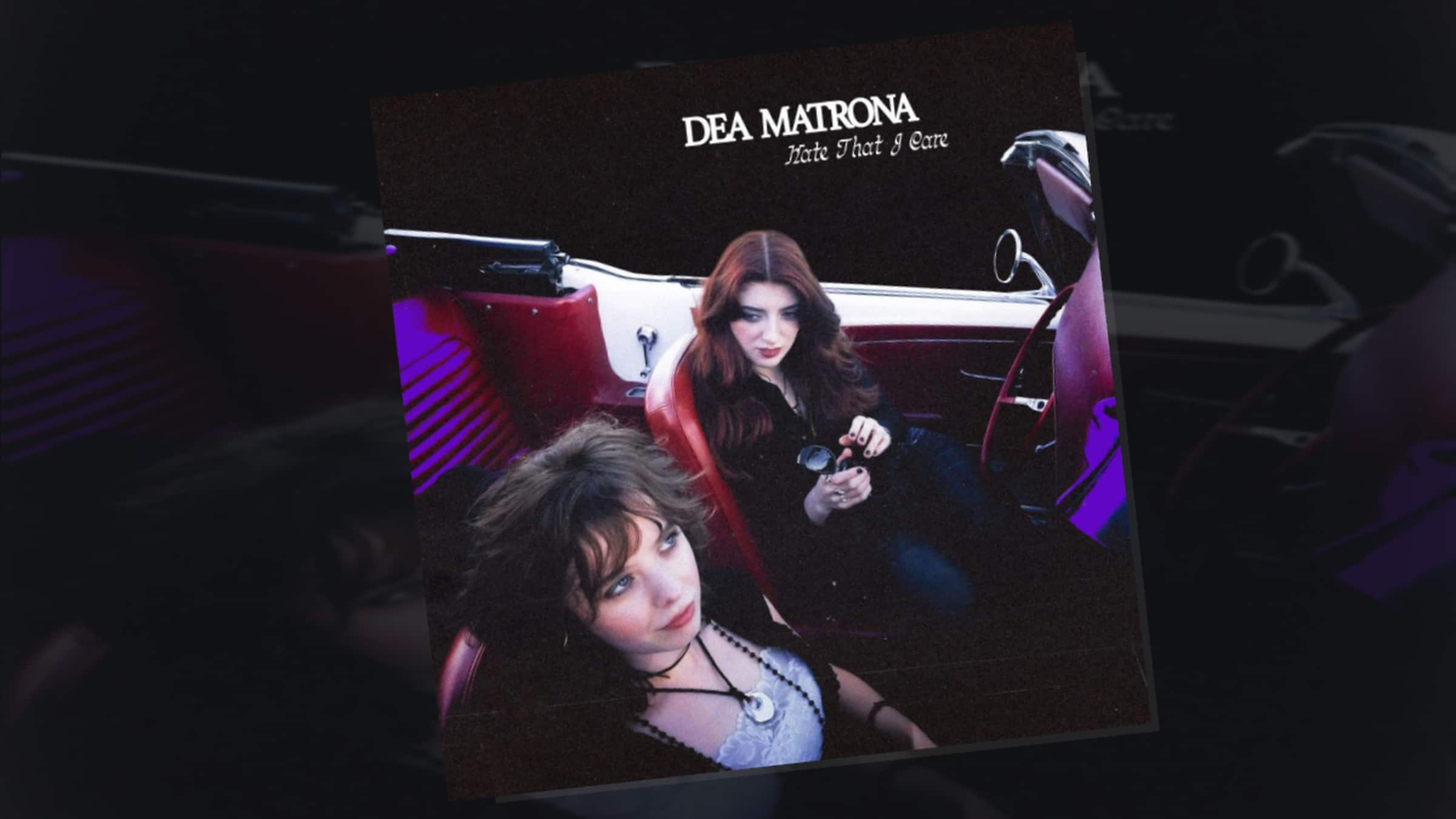
Dea Matrona’s Hate That I Care comes two years after their debut album For Your Sins.
Hate That I Care was entirely written, self-recorded and self-produced by the duo of Mollie McGinn and Orláith Forsythe while they were on the road. The Belfast streets where they once busked covers are a long way behind them now.
Quick Pulse
- Label: AWAL Recordings Ltd.
- Release Date: June 5th, 2026
- Genre: Rock
- Style: Blues-Rock, Pop-Rock, Alt-Rock
- Website: deamatrona.co.uk
Dea Matrona Blends Heartache and Hooks on 'Hate That I Care'
While Dea Matrona first attracted attention through their musicianship, their sophomore album demonstrates why the duo’s future may ultimately be defined by their songwriting.
Across its ten tracks, Hate That I Care balances vulnerability with confidence. The album frequently leans into melodic hooks and vocal harmonies but never abandons the rock foundation that has become Dea Matrona’s trademark.
The blues-rock sound that defined their earlier music still lays the foundation for Hate That I Care. They’ve built onto that foundation with alternative rock chops that feature dynamic drums, bold bass lines and punchy guitars.
Rather than chasing trends, the duo has excelled refining the strengths that brought them this far.

Stand Out Tracks
Every track on Hate That I Care could anchor this section. I chose these three because they represent a good sampling of what you’ll find on the album and struck a chord with me personally.
The opening title track packs a punch as soon as the needle drops. A short intro of gorgeous melodic guitar makes way for Mollie’s breathy vocals singing the heartache of wondering if someone you love is going to be there tomorrow. Orláith’s harmonies and background vocals add to the atmosphere.
As the song builds toward its end, a blistering guitar breakdown releases the frustration over even caring whether that person will be there. Starting off an album with a track as strong as “Hate That I Care” sets the bar high, but that’s no problem for Dea Matrona.
Orláith takes lead vocals on “Magic Spell” with Mollie providing the harmonies. Few bands can successfully alternate lead vocalists without losing their identity. Like Fleetwood Mac or The Warning, Dea Matrona turns that flexibility into a strength, allowing each song to take on its own personality while maintaining a cohesive sound.
“Magic Spell” is a bass heavy, head-bobbing song with a groovy drum beat. Mollie wrote all the drum parts for this album on MIDI and sent them to their drummer Tony Morra to record. Mollie also edits the bass grooves after Orláith records them. It all comes together on “Magic Spell” for a song that should be in any playlist.
The track’s opening line is “In she walks with the swagger of a black cat” and Orláith sings the entire song with that swagger.
The album’s final track, “Told U I’m Strange” leans pop without abandoning the rock that is the album’s foundation.
This is a song full of textures that sound especially pleasing in headphones. Mollie and Orláith weave an almost trance-like vocal melody that found me getting lost in their voices. The song fades out quietly as if they and the album are still going.
‘Hate That I Care’ Is a Statement Album
In an album with so many great songs it was hard choosing the three to highlight. For Your Sins caught my attention. Hate That I Care kept it.
Dea Matrona has become a force. Their songwriting, harmonies, and instinct for memorable hooks have evolved into something genuinely impressive. Hate That I Care is confirmation that one of rock’s most promising young acts has arrived.
Hate That I Care is available on streaming platforms and their website.
