



Danish melodic/progressive rock duo Vinyl Floor looked around the world, saw uncertainty and chaos and responded with Balancing Act. The band’s sixth album explores themes of finding meaning, balance, and optimism in a polarizing world.
The duo, comprised of multi-instrumentalist brothers Thomas Charlie Pedersen and Daniel Pedersen, blends melodic rock, British-influenced pop, progressive textures, and classical arrangements into a distinctive sound.
Quick Pulse
- Label: Karmanian Records
- Release Date: February 27, 2026
- Genre: Rock
- Style: Melodic rock with symphonic and progressive elements
- Website: vinylfloor.bandcamp.com
Vinyl Floor: Crafting 'Balancing Act' and a Brotherhood in Music
Sonic Pulse Reviews recently spoke with Thomas Pedersen about 'Balancing Act', songwriting, and nearly two decades of making music alongside his brother Daniel.
SPR: First, thank you for taking time out of your busy schedule to talk to our readers about Vinyl Floor and your new album Balancing Act. Let’s start with the obvious question. Vinyl Floor is one of the more distinctive band names I’ve come across. Where did it come from?
Thomas: We thank you for having us! Well, it’s an attempt at wanting to have a band name with multiple meanings. There’s the obvious, rather plain one – a retro floor, just like the one you might find at your grandma’s. Or one of the modern ones.
But then there’s the nostalgic nod to the golden era of music on vinyl. Both Daniel & I are avid collectors and I used to nickname Daniel’s apartment the ‘vinyl floor’ because of his collection filling up more than half of the space in his tiny apartment, haha.
SPR: Reviewers reach for a lot of different labels — melodic rock, progressive pop, power pop, symphonic rock. Do any of those labels feel accurate to you, and is there a description of what you do that you’ve never heard anyone use but wish they would?
Thomas: Yeah, I think all of them do, really. I mean, we were brought up on all sorts of rock music and our own music is naturally the result of the many different sub-genres thrown into a giant, melting pot. I agree with all of the above as I definitely hear some pop sensibilities in our arrangements as well and the way we shape the soundscapes. There are often underlying progressive touches as well. And we use strings on several songs which gives it an additional symphonic quality.
I think some of our work even leans towards art rock a bit, whatever that is. I mean, maybe? Otherwise I think all possible fields may have been covered and I find it interesting and a bit amusing when reviewers try to find a fitting label to put on us. Some reviewers appeared a bit surprised how mellow and poppy some of the new album is. I don’t disagree but I still hear a rock album, though. And I think we still have the chops to write rock songs that rock with the best of them.
The Brotherhood
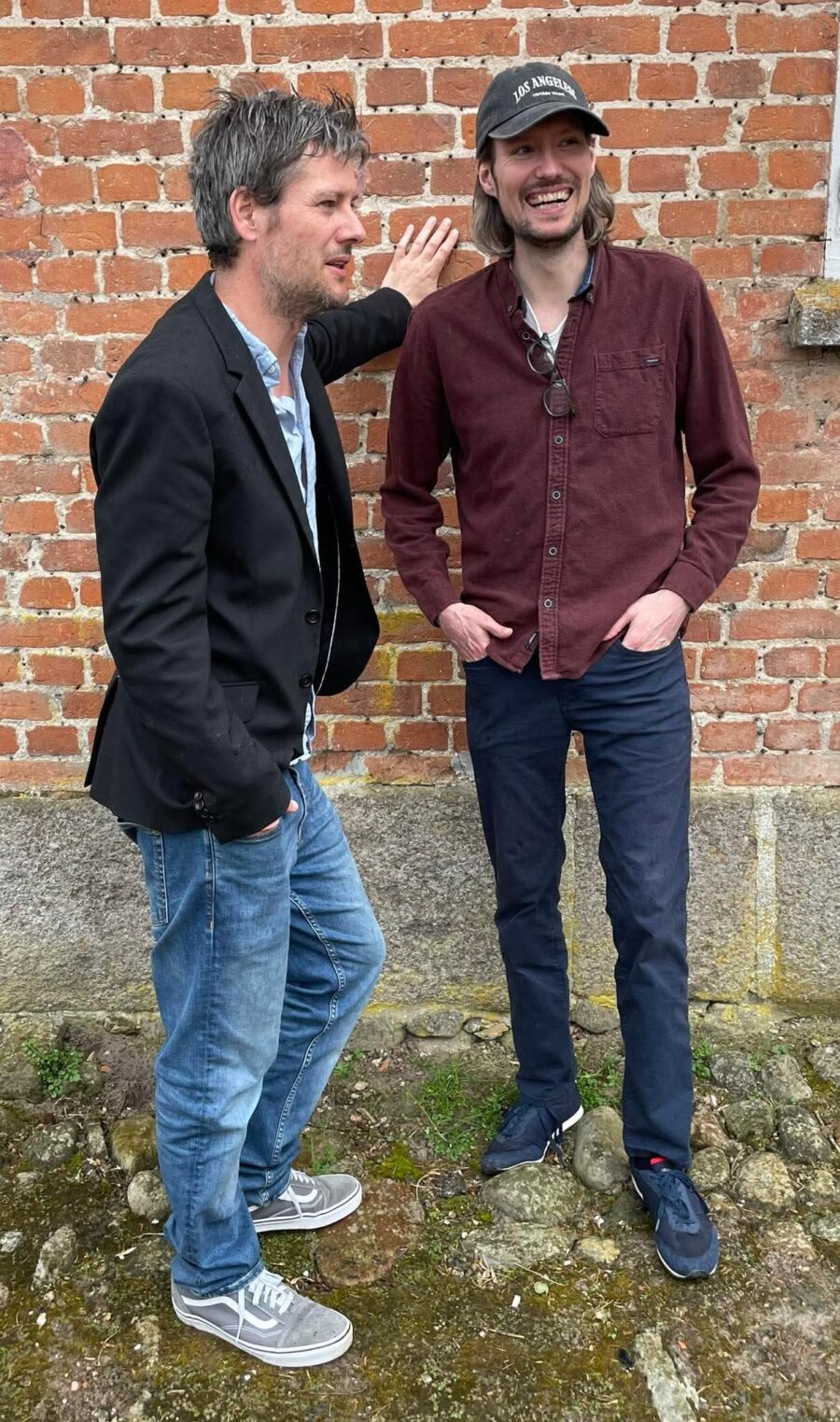
SPR: Nearly two decades of making music as brothers — what does that specific relationship make possible that a band of strangers or even friends couldn’t replicate? And what does it make harder?
Thomas: I usually tell people it’s like a band of friends but with further benefits. We are, indeed, very good friends and of course blood is thicker than water. We are invested in this together on so many levels. First and foremost, we share a deep love of music and an urge to create. We have a mutual understanding and rarely argue about the music. When we do argue it’s mostly because of practical stuff, logistics and things like that.
However, it can sometimes be difficult figuring out when we are colleagues and when we are just brothers hanging out because everything regarding our writing, production and music listening always tends to blend together anyway, so it can be difficult at times to separate roles and expectations.
A big risk regarding our music is not getting enough perspective, not getting enough fresh ears on things. We are aware of this and also use additional musicians and producers as sparring partners to the best of our ability.
Influences and Inspiration

SPR: “Mr. Rubinstein” was the first song I heard from Balancing Act, and it immediately reminded me of the tradition of classic British songwriting. Your music often gets compared to everyone from The Beatles to progressive and power-pop artists. When you sit down to write, whose influence do you hear most clearly in your own work, and what influences do listeners tend to miss?
Thomas: I never really sit down with a certain influence in mind. I only sit down with a clear lyrical vision in mind or at least a vague idea of where the lyric wants to go and I might have a few chords to go along with or a melody which has kickstarted some kind of idea. I can tell rather quickly if the song I’ve started writing is going to be a band-song or something I should keep for my solo-stuff instead.
Of course I move through various stages of ‘oh, that progression is a bit Elton John-sounding’ or whatever, and I’ve got to admit that the Beatles-vibe is ever present as some kind of divine inspiration and probably always will be. They have inspired me too much in all aspects of songwriting to not be lurking somewhere in the background. But I think I probably draw just as much from lesser known acts like Procol Harum and Moody Blues. I get inspired by many different things.
Balancing Act
"...we want the basics to be live and as thought-free as possible."
Thomas Pedersen
SPR: At what point did you realize the songs on Balancing Act were all circling around the idea of balance? Did the title come first, or did it emerge from the material?
Thomas: I brought in the title track and it was the final one of the bunch and I think it was Daniel who suggested it be the album title as well. It made us look into the song lyrics once again and we started seeing them in a different light. Many of the songs seemed to be about balance, or imbalance, and, as is usually the case with us, the concept slowly but surely started to unfold. We didn’t write these songs with a clear concept in mind. It was tagged unto the batch of songs, if you like.
SPR: The album was tracked live at Studio Möllan before moving back to Copenhagen for overdubs and vocals. How did that process shape the sound of the record compared to if you’d made it entirely in one place?
Thomas: Our history with Emil Isaksson and Studio Möllan goes way back. It’s part of our DNA, really. We have done everything there – full album recordings to just doing basic tracks, mixing, mastering, you name it. We always want the basic tracks to be as fresh and ‘live’ as possible because once we take them back to our own studio, there will be no clock ticking and no producer impatiently waiting and it will be all too easy nurturing every little detail and leaving absolutely nothing unprocessed.
That’s why we want the basics to be live and as thought-free as possible. The end result may sound more controlled, refined and even polished but the foundation should be immediate.
SPR: “Adelaide” is built on a theme from Haydn’s Piano Trio No. 34. How did you get there, and is that kind of classical borrowing something you plan in advance, or does it arrive unexpectedly during the writing?
Thomas: I never really plan anything in advance. I’m always open to whichever direction the song wants to go. ‘Adelaide’ is one of those curious little creatures that began life one night as I sat reading a book and listened to some piano trios by Haydn. Suddenly this particular trio sounded from the speakers and it was just so memorable and haunting.
I immediately started finding the notes and chords on my piano and it was not too complicated so I was able to pull it off since I’m not exactly a classically trained pianist.
I quickly laid down the verses and started writing my own complementary parts from there. The result was a strange little song which moves through quite some different areas during its relatively short run-time. I was actually in doubt whether I could use that Haydn theme at all but the publishing guys told me I was free to go. It’s free, public domain.
SPR: Bebe Risenfors and Christian Ellegaard are serious collaborators — Tom Waits sessions, the Danish Symphony Orchestra. What changes when musicians of that caliber step into the room? Do you write differently knowing who will ultimately be playing those parts?
Thomas: We are so blessed to have them gracing our work with their talents. We work a little differently with these guys as people would normally do, perhaps. On our previous album ‘Funhouse Mirror’ we got to play with Risenfors at the studio in Sweden but he preferred to record his wind parts in his own studio afterwards. Christian Ellegaard prefers to record his string parts himself in the great studios of his orchestra so it’s actually always a big puzzle. We show them the demos and tell them what we would like them to do.
Risenfors and Ellegaard are very, very different musicians. Ellegaard is a classically educated musician so we need to be on our toes regarding BPM, keys, metres, pitch and all. He has a fantastic feeling when it comes to understanding and performing the parts.
Risenfors is more of a jazzy player where improvisation and soloing ‘out of the box’ is the agenda of the day. We appreciate both approaches and they even add some tension to our sound design. On our new album ‘Balancing Act’ we actually wrote the horn and string parts with these two in mind even though they hadn’t agreed to play a note yet. Luckily, they obliged. Phew!
SPR: You’ve toured Japan, Germany, and the UK. Was there a moment on the road where you realized your music was connecting with audiences far beyond Denmark?
Thomas: Yes. There’s definitely a different vibe abroad and, dare I say, a bigger response to our kind of music in general. We’ve just returned from gigs in the UK where we received such a warm reception. In Japan we received letters from strangers telling us what the songs meant to them.
I think we might appeal more to people in foreign countries. We received some airplay with the first record but the Danish radio and press actually seemed to lose interest upon release of our second album ‘Peninsula’ which was a rather ambitious work. A work which went deeper and higher and sought to experiment more. We got the feeling that concept albums with a storyline was no way to go.
But listeners abroad started showing interest for the very same reasons. It just became abundantly clear to us that we had to concentrate most, if not all our promotional efforts, on international territories. Because we still want to experiment and we want to grow. And it has been that way ever since. But of course it will always be special to us playing a show in Denmark which we occasionally do.
Aspirations
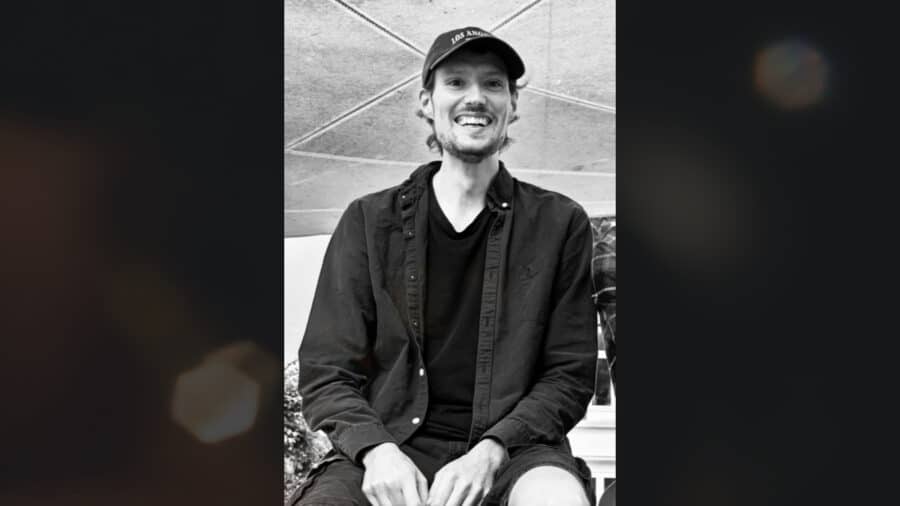
SPR: Six albums over seventeen years, 200+ shows, the global tours — all without a major label. What does sustainability look like for Vinyl Floor at this point? Is the goal still to grow, or has the definition of success shifted?
Thomas: Yes, still to grow and still to try and write good songs. I’m not sure we have the same energy as we did when we were young. But we have more perspective, some experience and there’s still fire in the oven. We want to keep doing it even though we may need to find new ways to keep recording and producing.
We wanted to be a big and famous band when we started out. We know now that that will never happen. We are an independent band without the reach and means of a major label but we are actually kind of proud of it and we do have some dedicated listeners whom we appreciate very much. It’s still fun to do and it feels meaningful.
SPR: The album is explicitly about searching for balance in a world that feels out of control — chaos, false promises, and insecurity. After listeners spend forty-something minutes with Balancing Act, what do you hope stays with them once the record ends?
Thomas: I hope they have been touched in some kind of way. By the melodies and/or the lyrics. I hope they can recognize a bit of themselves and hopefully they want to listen it all over again as I’m pretty confident the record benefits from multiple spins.
I hope the listener feels like he or she’s been taken for a ride. I think the songs go in different directions so hopefully listeners are not too confused and will be able to appreciate at least some of it.
SPR: Vinyl Floor’s thoughtful answers mirror the qualities found throughout Balancing Act: reflection, craftsmanship, and an enduring belief in melody. The same values we cherish at Sonic Pulse Reviews.
Standout Tracks and Final Thoughts
Balancing Act is the kind of album audiophiles use to show off a system. The production quality on this album is exemplary.
“Mr. Rubinstein” earned its spot as the album’s first single. Christian Ellegaard’s strings and Bebe Risenfors’ wind instruments feature prominently, and layers are gradually added as the song becomes more complex. Daniel Pedersen’s drumming deserves special mention as well, but the pièce de résistance is the outro. My only complaint is that it doesn’t last long enough.
The title track is another stand out song. The piano riding over pulsing bass on the intro is dramatic in a good way. Like the rest of Balancing Act, the songwriting here is outstanding. “They say life’s a balancing act / They’re all full of shit.” Who can’t relate to that at some point in their lives?
Thomas is right. This is a record that benefits from multiple spins.
Beneath the polished production, symphonic flourishes, and melodic hooks is an album wrestling with uncertainty while refusing to surrender to it. Vinyl Floor may have set out to explore the idea of balance, but they also created an engaging and thoughtfully crafted rock album worthy of any collection.
Balancing Act is available on all streaming platforms and on their Bandcamp page.
